Digital advertising relies heavily on performance metrics to measure campaign success and advertising efficiency. One of the most widely used advertising metrics is CPM, which stands for Cost Per Mille or Cost Per Thousand Impressions.
Whether you are running ads on social media, search engines, websites, or display networks, understanding the CPM formula is essential for managing advertising budgets and maximizing campaign visibility.
The CPM formula helps advertisers determine how much they are paying for every 1,000 impressions their advertisement receives. This metric is particularly valuable for brand awareness campaigns where visibility and reach matter more than clicks or conversions.
This guide explains the CPM formula in detail, including how it works, how to calculate it, practical examples, and tips for improving advertising performance.
What Is CPM?
CPM stands for Cost Per Mille, where the word mille means one thousand in Latin.
In digital marketing, CPM refers to the amount an advertiser pays for 1,000 ad impressions.
An impression occurs whenever an advertisement is displayed to a user, regardless of whether they click on the ad.
For example:
If an ad appears on a webpage 1,000 times, that equals 1,000 impressions.
CPM is primarily used in:
- Display advertising
- Banner advertising
- Video advertising
- Social media ads
- Programmatic advertising
- Brand awareness campaigns
The purpose of CPM is to measure advertising exposure and cost efficiency.
Understanding the CPM Formula
The CPM formula is simple and easy to apply.
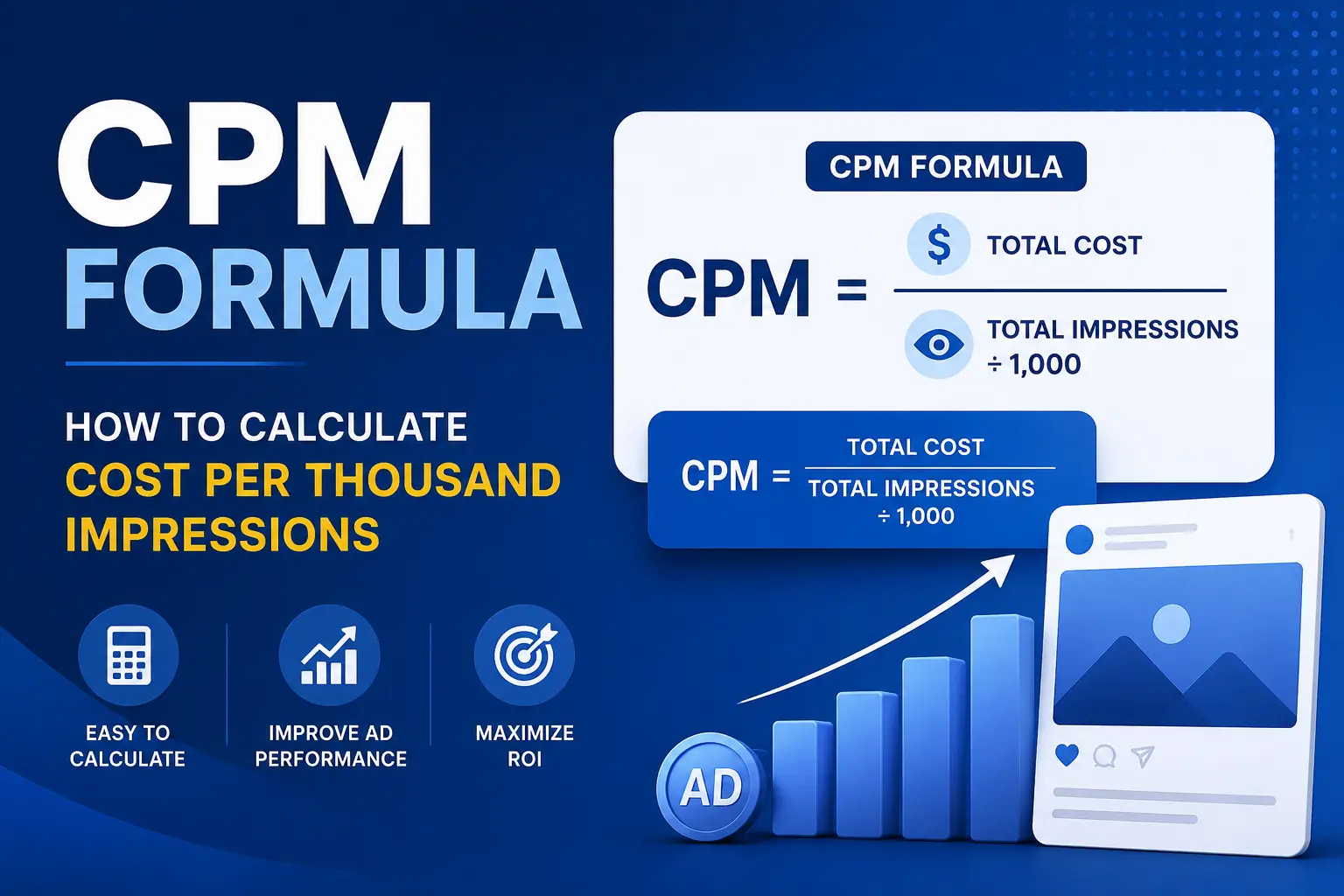
The standard formula is:
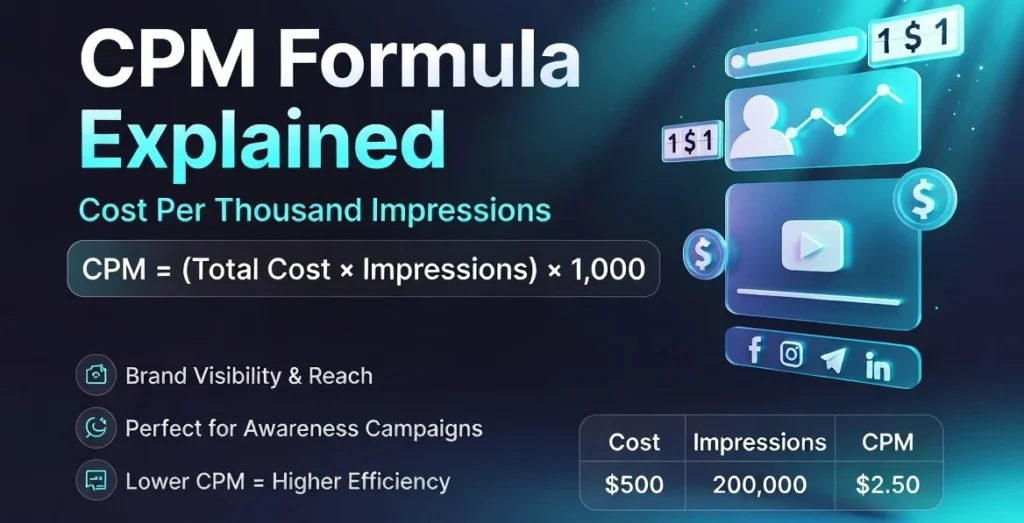
CPM = (Total Advertising Cost ÷ Total Impressions) × 1,000
This formula calculates the cost for every 1,000 impressions.
Breaking Down the CPM Formula
To understand CPM properly, it is important to know each component of the formula.
1. Total Advertising Cost
This is the total amount spent on an advertising campaign.
Examples include:
- Social media ad spend
- Display network cost
- Video advertising budget
- Sponsored content expenses
If you spend $500 on advertising, your total cost is $500.
2. Total Impressions
Impressions refer to the number of times an advertisement is shown to users.
Important:
Impressions are not clicks.
A user may see an ad without clicking it.
Example:
An advertisement displayed 50,000 times has:
50,000 impressions
3. Multiply by 1,000
Since CPM measures cost per thousand impressions, the result must be multiplied by 1,000.
This standardizes advertising costs and makes comparison easier.
How to Calculate CPM Formula Step by Step
Calculating CPM manually involves four simple steps.
Step 1: Determine Total Advertising Spend
Find the total campaign budget or spending.
Example:
Advertising Cost = $300
Step 2: Identify Total Impressions
Find how many impressions your ad received.
Example:
Impressions = 75,000
Step 3: Divide Cost by Impressions
Calculation:
300 ÷ 75,000
Result:
0.004
Step 4: Multiply by 1,000
Calculation:
0.004 × 1,000
Result:
CPM = $4
This means you paid $4 per 1,000 impressions.
CPM Formula Examples
Examples make the formula easier to understand.
Example 1: Website Banner Campaign
Campaign Cost = $200
Impressions = 40,000
Formula:
CPM = (200 ÷ 40,000) × 1,000
Result:
CPM = $5
This means the advertiser pays $5 for every 1,000 impressions.
Example 2: Facebook Advertising Campaign
Advertising Spend = $750
Impressions = 150,000
Formula:
CPM = (750 ÷ 150,000) × 1,000
Result:
CPM = $5
Example 3: Video Advertising
Campaign Budget = $1,000
Impressions = 500,000
Formula:
CPM = (1,000 ÷ 500,000) × 1,000
Result:
CPM = $2
This indicates relatively low-cost advertising exposure.
Here are some quick CPM calculations.
| Advertising Cost | Impressions | CPM |
| $50 | 10,000 | $5 |
| $100 | 25,000 | $4 |
| $250 | 100,000 | $2.50 |
| $500 | 200,000 | $2.50 |
| $1,000 | 500,000 | $2 |
This table shows how increasing impressions can reduce CPM.
Reverse CPM Formula
Sometimes advertisers already know CPM and impressions and need to calculate advertising cost.
The reverse CPM formula is:
Advertising Cost = (CPM × Impressions) ÷ 1,000
Example
CPM = $6
Impressions = 100,000
Calculation:
Cost = (6 × 100,000) ÷ 1,000
Result:
Advertising Cost = $600
Why the CPM Formula Matters
The CPM formula is important because it helps advertisers:
Compare Advertising Platforms
Different ad networks have different CPM rates.
Using CPM makes comparison easier.
Plan Campaign Budgets
Advertisers can estimate costs before launching campaigns.
Measure Brand Exposure
CPM focuses on visibility and audience reach.
Improve Advertising Efficiency
Tracking CPM helps optimize spending and campaign performance.
CPM Formula vs CPC Formula
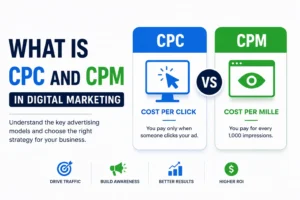
CPM and CPC are often confused.
However, they serve different purposes.
| Metric | Formula | Purpose |
| CPM | (Cost ÷ Impressions) × 1,000 | Visibility |
| CPC | Cost ÷ Clicks | Traffic |
CPM
Best for:
- Brand awareness
- Reach
- Ad exposure
- CPC
Best for:
- Website traffic
- Click generation
- Lead campaigns
Understanding the difference helps advertisers choose the right strategy.
Factors Affecting CPM
Several factors influence CPM rates.
Audience Targeting
Specific audiences often have higher CPM costs.
Industry Competition
Highly competitive industries usually experience higher CPM.
Ad Placement
Premium placements may increase advertising cost.
Geographic Location
Advertising in certain regions can cost more.
Seasonality
Holiday seasons and major sales events often increase CPM.
How to Improve CPM Performance
Reducing CPM while maintaining quality impressions improves campaign results.
Strategies include:
Improve Ad Quality
High-quality creative can lower advertising cost.
Optimize Audience Targeting
Balance reach and specificity.
Test Different Ads
A/B testing helps identify better-performing creatives.
Monitor Campaign Analytics
Regular tracking prevents budget waste.
Common CPM Formula Mistakes
Many advertisers make avoidable CPM calculation errors.
Common mistakes include:
Confusing Impressions with Clicks
Impressions measure views, not engagement.
Forgetting to Multiply by 1,000
This produces incorrect CPM values.
Using Partial Advertising Cost
Always include total campaign expenditure.
Ignoring Campaign Goals
CPM should support awareness-focused objectives.
Conclusion
The CPM formula is one of the most important tools in digital advertising. It provides a clear understanding of how much advertisers pay for ad visibility and helps compare campaign costs across platforms.
By learning how CPM works and applying the formula correctly, marketers and businesses can improve advertising efficiency, manage budgets better, and achieve stronger campaign performance.
Whether you are a beginner or an experienced advertiser, mastering the CPM formula is essential for smarter digital marketing decisions.
Frequently Asked Questions
What is the CPM formula?
The CPM formula is:
CPM = (Advertising Cost ÷ Impressions) × 1,000
Why multiply by 1,000?
Because CPM measures the cost for one thousand impressions.
Is a lower CPM always better?
Not necessarily. Quality impressions and campaign goals matter.
Can CPM be calculated manually?
Yes, the formula is simple and can be calculated manually or with an online CPM calculator.
What does CPM measure?
CPM measures advertising cost efficiency and audience exposure.