Tracking advertising performance is essential for every business that invests in digital marketing. One of the most important metrics used by advertisers is Cost Per Acquisition (CPA). Understanding how to calculate CPA helps businesses determine how much they spend to acquire a customer, lead, or conversion.
While CPA can be calculated manually using a simple formula, marketers often deal with multiple campaigns, making calculations repetitive and time-consuming. This is why many professionals prefer using a CPA calculator for instant and accurate results.
In this guide, you’ll learn how to calculate CPA, understand the formula, review practical examples, and discover why a CPA calculator can save valuable time and effort.
What Is CPA?
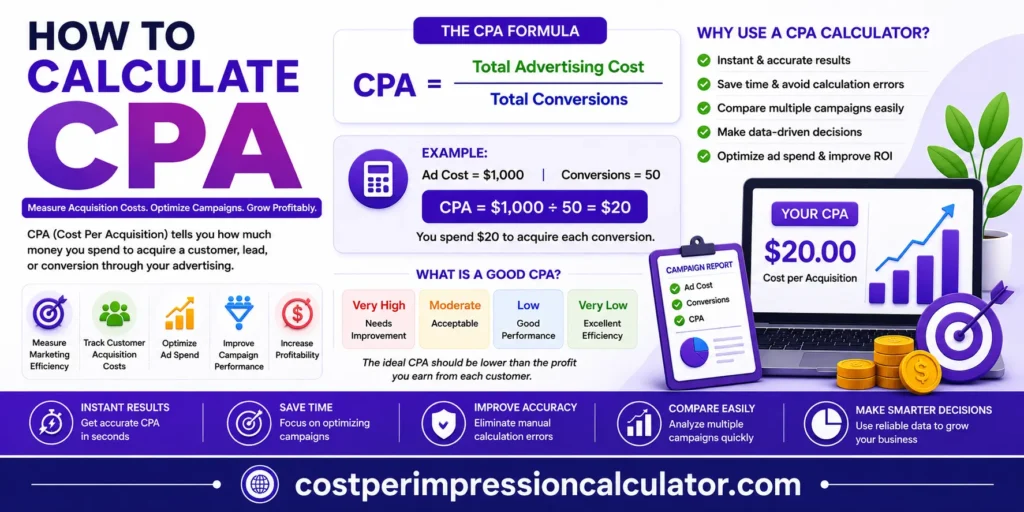
CPA stands for Cost Per Acquisition. It measures the amount of money spent to acquire a single customer, lead, signup, sale, or desired action through an advertising campaign.
CPA is commonly used to evaluate:
- Marketing efficiency
- Advertising profitability
- Campaign performance
- Lead generation costs
- Customer acquisition expenses
A lower CPA generally indicates that your campaigns are generating conversions more efficiently.
How to Calculate CPA
The standard CPA formula is:
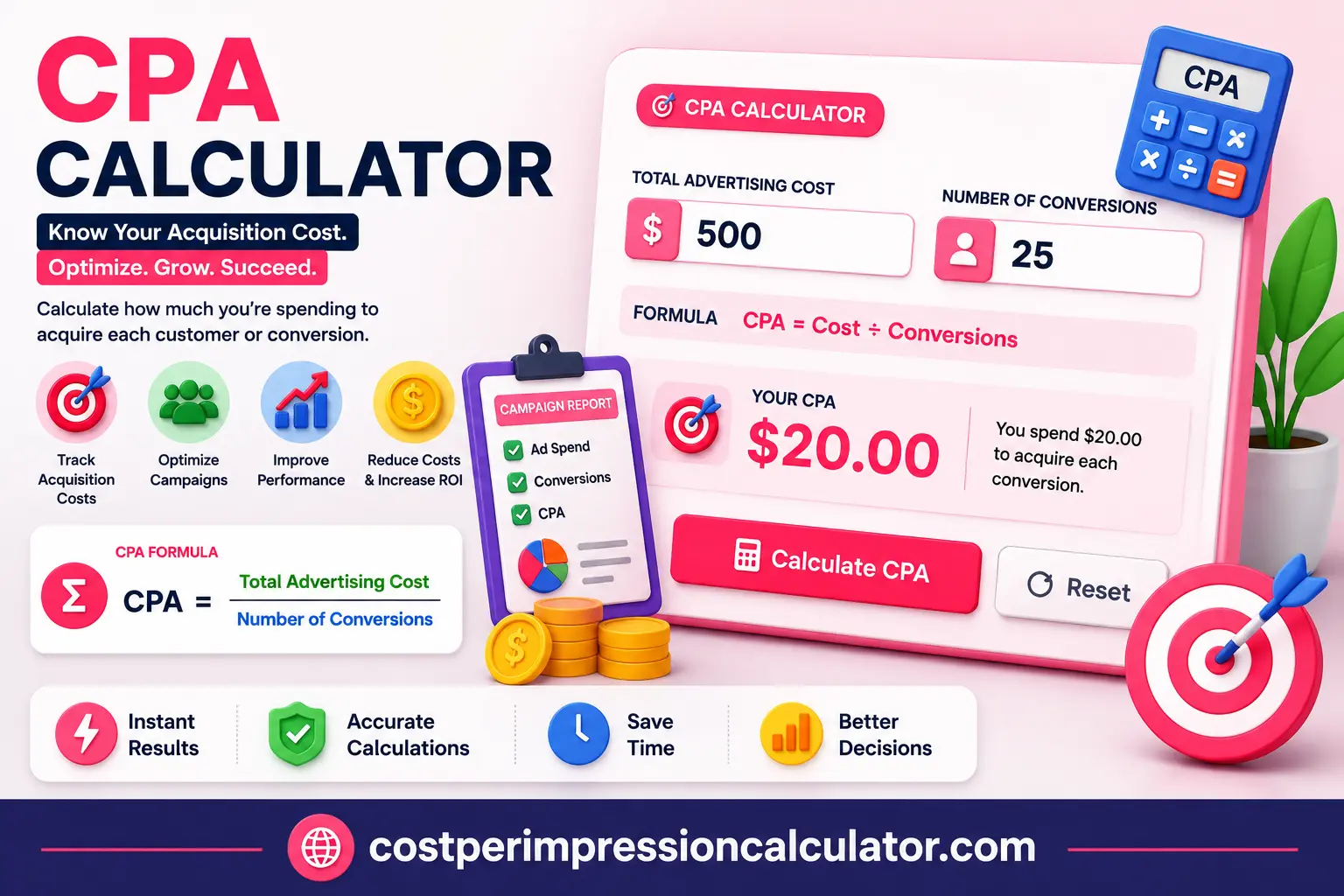
CPA = Total Advertising Cost ÷ Total Conversions
This formula shows how much you spend to acquire each conversion.
Example 1
Suppose:
- Total Advertising Cost = $1,000
- Total Conversions = 50
- CPA = $1,000 ÷ 50
- CPA = $20
This means you spend $20 to acquire each customer or conversion.
Step-by-Step Guide to Calculate CPA
If you want to learn how to calculate CPA manually, follow these simple steps:
Step 1: Determine Total Advertising Cost
Calculate the total amount spent on your advertising campaign.
This may include:
- Google Ads spending
- Social media advertising
- Display advertising
- Sponsored content expenses
Step 2: Count Total Conversions
Identify the number of successful actions generated by the campaign.
Examples include:
- Product purchases
- Lead form submissions
- Newsletter signups
- App downloads
Step 3: Apply the Formula
Divide total advertising costs by the total number of conversions.
Step 4: Analyze the Results
A lower CPA usually indicates better campaign efficiency, while a higher CPA may suggest the need for optimization.
Why Manual CPA Calculations Can Be Challenging
Although the formula is straightforward, manually calculating CPA can become difficult when:
- Managing multiple campaigns
- Tracking conversions across platforms
- Monitoring daily performance
- Comparing campaign periods
- Handling large advertising budgets
Small calculation mistakes can affect decision-making and campaign optimization.
Why You Should Use a CPA Calculator
Instead of manually calculating CPA every time, using a CPA calculator offers several benefits.
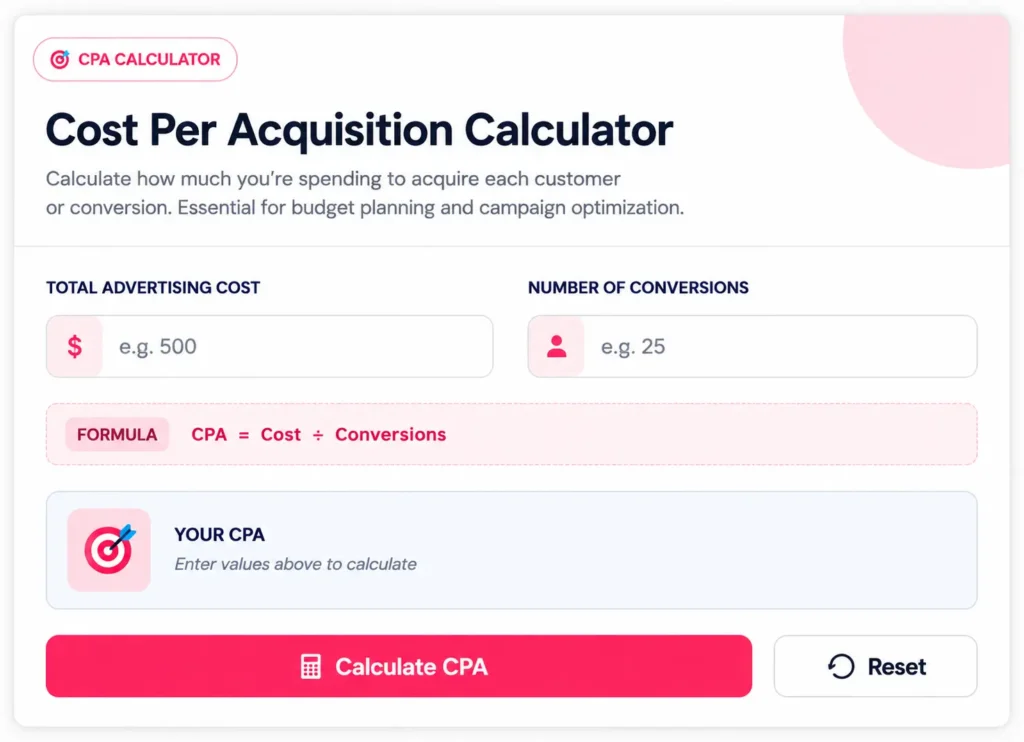
- Instant Results
- Get accurate CPA values within seconds.
- Improved Accuracy
- Eliminate human calculation errors.
- Saves Time
- Focus on campaign optimization instead of repetitive calculations.
- Easy Campaign Comparison
- Compare advertising performance across different channels quickly.
- Better Decision-Making
- Access reliable data for smarter marketing strategies.
For businesses running ongoing advertising campaigns, a CPA calculator is often the fastest and most efficient solution.
Practical CPA Examples
Example 2
- Advertising Cost = $500
- Conversions = 25
- CPA = $500 ÷ 25
- CPA = $20
This means each conversion costs $20.
Example 3
- Advertising Cost = $2,000
- Conversions = 100
- CPA = $2,000 ÷ 100
- CPA = $20
Again, the business spends $20 per acquisition.
What Is a Good CPA?
A good CPA varies depending on industry, business model, and profit margins.
General guidelines include:
| CPA Range | Performance |
| Very High | Needs Improvement |
| Moderate | Acceptable |
| Low | Good Performance |
| Very Low | Excellent Efficiency |
The ideal CPA should always be lower than the profit generated from each acquired customer.
Common Mistakes When Calculating CPA
When learning how to calculate CPA, avoid these common mistakes:
- Ignoring Advertising Expenses
Include all campaign-related costs whenever possible.
- Tracking Incorrect Conversions
Ensure only valid conversions are counted.
- Comparing Different Timeframes
Use consistent date ranges for accurate comparisons.
- Relying on Manual Calculations
Repeated manual calculations increase the risk of errors.
CPA vs CPC
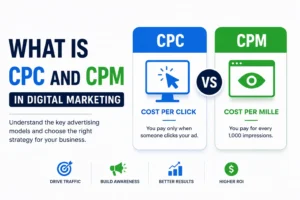
Many beginners confuse CPA with Cost Per Click (CPC).
CPA measures the cost of acquiring a conversion.
CPC measures the cost of generating a click.
While both metrics are important, CPA provides a clearer picture of overall campaign effectiveness.
Benefits of Monitoring CPA Regularly
Tracking CPA consistently helps businesses:
- Improve campaign profitability
- Reduce customer acquisition costs
- Optimize advertising budgets
- Increase marketing efficiency
- Scale successful campaigns
Using a dedicated calculator makes this process faster and more reliable.
Conclusion
Understanding how to calculate CPA is essential for measuring advertising efficiency and controlling marketing costs. By dividing total advertising expenses by the number of conversions, businesses can determine exactly how much they spend to acquire each customer or lead.
Although the calculation is relatively simple, manually performing CPA calculations across multiple campaigns can be time-consuming and prone to errors. A CPA calculator provides instant, accurate, and reliable results, allowing marketers to focus on improving campaign performance rather than spending time on repetitive calculations. For advertisers, agencies, and business owners, using a CPA calculator is the smartest way to monitor acquisition costs and make data-driven marketing decisions.
Frequently Asked Questions (FAQs)
1. What does CPA mean?
CPA stands for Cost Per Acquisition. It represents the amount spent to acquire a customer, lead, sale, or other desired conversion through advertising.
2. How do I calculate CPA quickly?
Use the Calculator for accurate calculation
3. What is considered a good CPA?
A good CPA depends on your industry and profit margins. Generally, your CPA should be lower than the revenue or profit generated from each acquired customer.
4. Should all advertising costs be included in CPA calculations?
Yes. For accurate results, include all advertising-related expenses such as ad spend, management fees, and agency costs whenever applicable.
5. Why should I use a CPA calculator instead of calculating manually?
A CPA calculator saves time, improves accuracy, eliminates manual errors, and makes it easier to analyze multiple campaigns quickly.