YouTube Ads Cost Per 1000 Impressions: The Complete 2026 Pricing Guide
Everything marketers, agencies, and students need to know about YouTube CPM rates, real 2026 benchmarks, and how to budget campaigns without overspending.
What You’ll Learn
- What “cost per 1000 impressions” actually means on YouTube
- Average YouTube ads cost per 1000 impressions in 2026
- Factors that push your CPM up or down
- How much a 30 second YouTube ad costs
- How much a 15 second YouTube ad costs
- Cost per click vs. CPM
- Monthly YouTube advertising budgets
- Using a calculator to plan your spend
- Video completion rate benchmarks
- Performance benchmarks by industry
- Tips to lower your CPM
- FAQs
If you’ve typed “YouTube ads cost per 1000 impressions” into Google before opening a campaign, you’re not alone. It’s one of the first questions every marketer, small business owner, and student of digital advertising asks before setting a budget — and the honest answer is “it depends,” but within a fairly predictable range. This guide breaks down exactly what you’ll pay in 2026, what moves the number up or down, and how to plan a YouTube campaign with confidence instead of guesswork.
1What Does “Cost Per 1000 Impressions” Mean on YouTube?
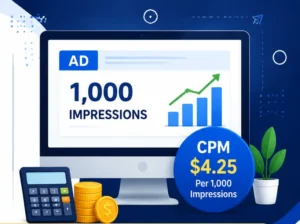
CPM stands for Cost Per Mille — “mille” being Latin for thousand. In plain English, it’s the amount an advertiser pays every time their ad is shown 1,000 times, regardless of whether the viewer watches, skips, or clicks. Understanding this figure is the foundation of budgeting any awareness campaign on the platform, because CPM is the metric Google Ads uses to bill most standard video placements.
This is different from Cost Per View (CPV), where you only pay when someone actually watches your ad for 30 seconds (or the full ad, if it’s shorter) or interacts with it. Skippable in-stream ads are usually billed on CPV, while bumper ads, non-skippable ads, and reserved placements like Masthead are typically billed on CPM.
2Average YouTube Ads Cost Per 1000 Impressions in 2026
Pricing data from multiple 2026 industry reports puts the typical rate somewhere between $4 and $15, with a market-wide average closer to $9 once you factor in premium, competitive niches. Here’s how the numbers break down by ad format:
| Ad Format | Billing Model | Typical CPM Range |
|---|---|---|
| Skippable in-stream (TrueView) | CPV, effective CPM ~$6–$12 | $6 – $12 |
| Non-skippable in-stream | CPM | $6 – $10 |
| Bumper ads (6 seconds) | CPM | $10 – $20 |
| YouTube Shorts ads | CPM | $2 – $5 |
| Masthead / reserved placements | Fixed CPM | $300,000+ per day |
So, if you’re budgeting on the assumption of a $9 average, reaching 100,000 impressions would cost roughly $900, while a smaller test campaign of 10,000 impressions would run closer to $90. The exact rate you’re quoted in the auction will always fall somewhere inside these bands depending on who else is bidding for the same audience at the same moment.
Quick benchmark: Educational, finance, and B2B software advertisers typically see CPMs on the higher end ($10–$25), while entertainment and broad consumer content often sees CPMs on the lower end ($2–$8).
3What Actually Moves Your CPM Up or Down?
YouTube ad pricing is auction-based, not fixed. A handful of variables explain most of the swing you’ll see between campaigns:
- Audience competition — narrow, high-intent audiences (like “CFOs” or “real estate investors”) cost more than broad interest categories.
- Geography — US, UK, Canada, and Australia traffic commands a premium over lower-cost regions.
- Ad format — bumper and non-skippable formats guarantee full delivery, so they’re priced higher per thousand impressions than skippable formats.
- Seasonality — Q4 (October–December) sees the highest average YouTube CPM per 1,000 views of the year as retail and e-commerce advertisers compete for holiday shoppers.
- Creative quality and relevance score — ads with strong retention and engagement are rewarded with lower costs by YouTube’s algorithm.
- Device and placement — CTV (connected TV) inventory generally carries higher CPMs than mobile due to stronger completion rates.
Because so many variables stack on top of each other, two advertisers running campaigns on the same day can see very different final numbers — one might land at $5, another at $18, both perfectly normal outcomes of the auction.
4How Much Does a 30 Second YouTube Ad Cost?
For skippable in-stream ads, a 30-second creative is billed the same way any other TrueView ad is: on cost-per-view. Most advertisers pay between $0.05 and $0.30 per view for a 30-second spot, which translates to an effective CPM of roughly $6–$12 once you account for the full audience reached, including people who skip before the 30-second mark and aren’t charged at all. If you instead run that same 30-second creative as a non-skippable ad, expect a flat CPM of $6–$10, since every impression is billed whether the viewer watches or not.
5How Much Does a 15 Second YouTube Ad Cost?
Fifteen-second ads are most commonly run as non-skippable, pre-roll placements that must play in full before the main video starts. Because they guarantee a complete view, they’re billed on CPM rather than CPV — typically in the $6–$10 range per thousand impressions. That makes 15-second non-skippable spots a solid middle ground: cheaper than bumper ads, but with more room to tell a story than a 6-second format allows.
6YouTube Ads Cost Per Click vs. CPM
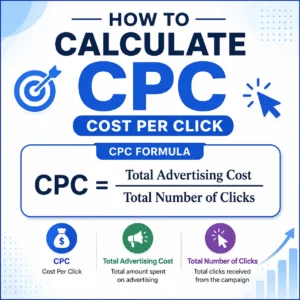
Not every YouTube campaign is priced on impressions or views. For Demand Gen and in-feed campaigns optimized toward website traffic, cost per click typically ranges from $0.50 to $3.50, with most advertisers landing between $0.30 and $2.00 depending on industry and competition. CPC campaigns make sense when the goal is driving clicks to a landing page, while CPM and CPV remain the better fit for pure brand awareness and reach.
7How Much Does It Cost to Advertise on YouTube Per Month?
There’s no platform minimum beyond a $10/day floor, but real-world spending tends to fall into a few tiers:
- Testing phase: $300–$1,500/month — enough to validate creative and targeting.
- Small business / SMB: $500–$5,000/month — the most common range for local and regional advertisers.
- Active optimization: $3,000–$8,000/month — running multiple audience segments and A/B testing creative.
- Enterprise / national brands: $10,000+/month, often scaling into six figures for major launches.
Roughly 48% of businesses running video ad campaigns allocate between 6% and 30% of their total advertising budget to YouTube specifically, which gives you a reasonable starting point if you’re building a budget from scratch rather than reverse-engineering it from your CPM target.
8Use a YouTube Ads Cost Per 1000 Impressions Calculator
Manually estimating spend across different CPM ranges gets tedious fast, especially when you’re comparing formats or forecasting multiple campaigns. A YouTube ads cost per 1000 impressions calculator does the math instantly — you enter your expected CPM and impression goal, and it returns your total projected spend, along with the reverse calculation (how many impressions a given budget will buy).
Want to plug in your own numbers instead of doing the math by hand? Our free cost per impression calculator lets you estimate total spend, compare CPM scenarios, and forecast reach in seconds — no signup required.
Try the Free CalculatorThis kind of tool is especially useful when you’re pitching a client or building an internal budget proposal, since it lets you quickly model best-case and worst-case CPM scenarios side by side instead of running separate spreadsheet formulas for every format.
9Video Completion Rate Benchmarks
Cost isn’t the only number worth tracking — how much of your ad people actually watch matters just as much. Looking at average video completion rate YouTube ads data across formats, creative under 60 seconds sits around 66–71%, dropping to roughly 56% for videos between one and two minutes, and further still for longer creative. Quartile data tells a similar story: about 95% of impressions reach the first quartile of an ad, but only around 54% make it all the way to the end. The average skip window is short too — most viewers decide whether to skip within the first 9 seconds, which is why your opening hook matters more than almost any other creative decision you’ll make.
10YouTube Benchmarks by Industry
Because CPM, view rate, and click-through rate all vary by vertical, comparing your numbers against a general industry benchmark gives you a far more realistic performance target than a single platform-wide average. A few patterns hold consistently across 2026 reporting:
- Education, finance, and B2B software — highest CPMs ($10–$25), but also strong view rates above 35%.
- Automotive, science & tech, and home & garden — above-average view rates, moderate CPMs.
- Retail — the lowest average view rate of any major category (around 15–16%) due to heavy competition and ad saturation.
- Entertainment and broad consumer content — lower CPMs ($2–$8) but also lower average engagement per impression.
The average cross-industry view rate on skippable in-stream campaigns is roughly 31–32%, and the average click-through rate sits around 0.5–0.65%. If your own numbers land meaningfully below these, it’s usually a sign to revisit targeting or the first few seconds of your creative rather than the budget itself.
11Practical Ways to Lower Your CPM
- Tighten your targeting gradually. Layering a custom intent audience with topic exclusions often reduces wasted impressions more than broadening reach does.
- Front-load your hook. Lead with the value proposition in the first 5 seconds instead of a slow brand intro — this alone can meaningfully lift view rate.
- Test Shorts placements. With CPMs often in the $2–$5 range, Shorts ads are one of the most cost-efficient ways to add reach without inflating your average spend.
- Use frequency capping. Showing the same ad more than 3–5 times per week to one viewer wastes budget on diminishing returns.
- Let the algorithm reward good creative. Ads with strong retention and engagement are shown more efficiently by YouTube’s system, which lowers your effective cost over time.
12Frequently Asked Questions
What is a good YouTube ads cost per 1000 impressions?
For most small-to-mid advertisers, anything in the $5–$10 CPM range is considered reasonable. Highly competitive niches like finance or B2B software can see a healthy rate climb as high as $15–$25 and still deliver strong ROI, since cost alone doesn’t determine performance.
Why does my CPM change from week to week?
YouTube pricing is auction-based and reactive to real-time competition, so shifts in seasonality, audience size, and competing advertisers can move your CPM even if you haven’t changed your campaign settings.
Is CPM or CPV better for a small budget?
CPV is generally more forgiving for small budgets because you only pay for actual views, not every impression — making it a lower-risk starting point before scaling into CPM-based formats like bumper ads.
Does a lower CPM always mean a better campaign?
Not necessarily. A cheap CPM paired with a poor view rate or completion rate can end up costing more per meaningful engagement than a higher CPM with strong retention. Always evaluate cost alongside view rate and completion data.
Whether you’re planning your first test campaign or refining a media plan you’ve run for years, keeping a close eye on YouTube ads cost per 1000 impressions — alongside view rate, completion rate, and click-through rate — gives you the full picture instead of a single, easily misleading number. Run your own scenarios through the cost per impression calculator before you commit budget, and revisit your benchmarks each quarter as auction dynamics shift.
Pricing ranges reflect aggregated 2026 industry reporting and Google Ads auction data. Actual costs vary by account, audience, and campaign objective — use these figures as planning benchmarks, not guaranteed rates.