Cost Per Viewable Impression (vCPM): The Complete Guide
Learn how vCPM measures ad visibility instead of just ad delivery — with the formula, worked examples, industry benchmarks, and the exact steps to lower your cost per viewable impression.
Digital advertising is no longer just about how many times an ad is served — it’s about whether people actually had a chance to see it. That’s the gap Cost Per Viewable Impression (vCPM) was built to close.
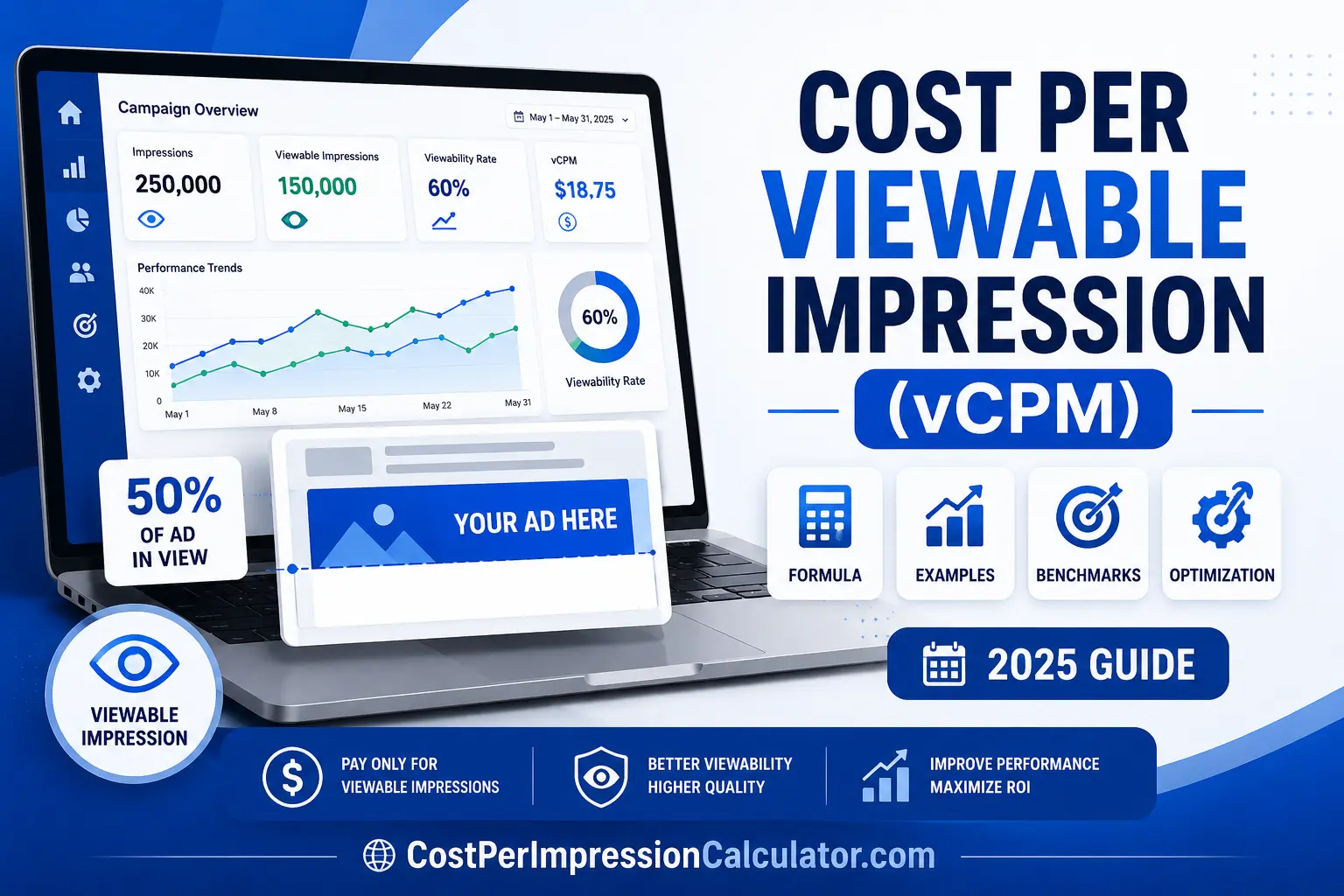
Unlike traditional CPM, which charges advertisers for every served impression, vCPM measures the cost of 1,000 viewable impressions — ads that meet recognized visibility standards. That gives marketers a far more accurate picture of campaign quality, and ensures budgets are spent on impressions people genuinely had the opportunity to see.
Whether you’re running Google Display campaigns, video ads, programmatic buys, or brand awareness campaigns, understanding vCPM can meaningfully improve both performance and return on investment. You can plug your own numbers into our free Cost Per Impression Calculator as you read through the examples below.
What Is Cost Per Viewable Impression?
Cost Per Viewable Impression (vCPM) is a digital advertising pricing model in which advertisers pay for 1,000 viewable impressions instead of 1,000 served impressions.
A viewable impression means the ad was actually visible on a user’s screen according to industry viewability standards — not merely delivered somewhere on the page. Instead of paying simply because an ad was sent to a browser, advertisers pay only when it had a realistic opportunity to be seen.
What Counts as a Viewable Impression?
Display Advertisements
- At least 50% of the ad’s pixels must be visible
- Must remain visible for at least 1 continuous second
Video Advertisements
- At least 50% of the video player must be visible
- Must remain visible for at least 2 continuous seconds
These thresholds exist so advertisers can measure genuine exposure instead of simple ad delivery.
Cost Per Viewable Impression Formula
| Advertising Cost | $750 |
| Viewable Impressions | 30,000 |
| Total Cost | $2,500 |
| Viewable Impressions | 125,000 |
Why Cost Per Viewable Impression Matters
Traditional CPM counts every served impression — even if the ad loads below the visible portion of a page or is skipped before it can reasonably be seen. vCPM focuses only on impressions that satisfy visibility standards, making it a far better measurement of advertising effectiveness.
- 1
Better Budget Efficiency
Spend is concentrated on impressions people could actually see.
- 2
Higher-Quality Impressions
Filters out placements that never had a real chance of visibility.
- 3
More Accurate Reporting
Campaign metrics reflect genuine exposure, not raw delivery counts.
- 4
Improved Brand Awareness Measurement
Awareness lift correlates far more closely with viewable reach than served reach.
- 5
Greater Confidence in Performance
Teams can trust the numbers when reporting results upward.
Cost Per Viewable Impression vs. CPM
| Feature | CPM | Cost Per Viewable Impression |
|---|---|---|
| Charges for served ads | Yes | No |
| Charges for visible ads | No | Yes |
| Better for brand awareness | Moderate | Excellent |
| Measures ad visibility | No | Yes |
| Improves campaign quality | Limited | High |
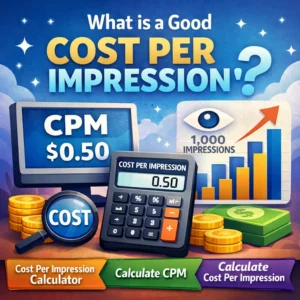
Both metrics measure cost per thousand impressions — but vCPM optimizes for quality rather than raw quantity. Curious how your own CPM stacks up? Check it with our CPM Calculator.
Advantages of Cost Per Viewable Impression
- 1
Higher Advertising Quality
Advertisers know budgets are spent on impressions users actually had a chance to see.
- 2
Improved Brand Awareness
An ad can’t influence customers if it never becomes visible — vCPM ensures greater exposure.
- 3
Better Return on Investment
Eliminating invisible impressions often improves overall campaign efficiency.
- 4
Increased Transparency
vCPM delivers more meaningful reporting than impression-based pricing alone.
- 5
Better Campaign Optimization
Marketers can compare publishers on actual visibility rather than simple delivery counts.
Factors Affecting Cost Per Viewable Impression
Ad Placement
- Above-the-fold banners
- Homepage placements
- Sticky advertisements
Audience Targeting
- Executive decision-makers
- Healthcare professionals
- IT managers
- Financial executives
Device Type
- Desktop
- Mobile
- Tablet
- Connected TV
Ad Format
- Display banners
- Native ads
- Rich media ads
- Video ads
- Responsive display ads
Publisher quality plays a role too — premium publishers tend to offer better page layouts, faster load times, higher viewability rates, and stronger user engagement.
Industry Benchmarks
Actual pricing varies by platform, audience, and geography, but approximate industry benchmarks look like this:
| Campaign Type | Typical vCPM |
|---|---|
| Standard Display | $2 – $8 |
| Premium Display | $8 – $15 |
| Video Advertising | $10 – $30 |
| Programmatic Premium | $15 – $40 |
| Connected TV | $20 – $60 |
How to Improve Cost Per Viewable Impression Performance
Improving performance is usually about increasing viewability — not simply cutting costs.
- Choose premium publishers
- Focus on above-the-fold placements
- Use responsive ad sizes
- Improve creative quality
- Optimize page loading speed
- Remove low-performing placements
- Monitor viewability reports regularly
- Test multiple creatives
- Use frequency caps
- Refine audience targeting
Common Mistakes to Avoid
Ignoring Viewability Reports
Many advertisers monitor CPM closely while ignoring whether ads are actually being seen.
Buying Only Low-Cost Inventory
Cheaper impressions often come with poor visibility, undermining the point of the campaign.
Poor Creative Design
Even a highly viewable ad performs poorly if the creative fails to capture attention.
Not Testing Placements
Different websites can have dramatically different viewability rates — assumptions aren’t a substitute for testing.
When Should You Use Cost Per Viewable Impression?
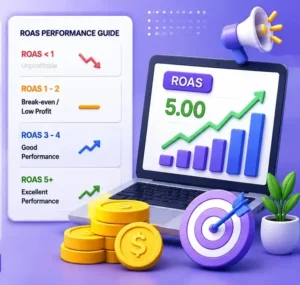
Performance campaigns focused solely on conversions may prioritize metrics like CPA or ROAS alongside vCPM rather than in place of it — you’ll find both in the tools below.
Related Calculators on CostPerImpressionCalculator.com
Pair vCPM with these free tools to get the full picture of your campaign performance:
Note: update the links above to your exact calculator URLs/slugs once each tool page is published.
Frequently Asked Questions
QWhat is Cost Per Viewable Impression?
vCPM is an advertising pricing model where advertisers pay for 1,000 viewable ad impressions instead of 1,000 served impressions.
QHow is Cost Per Viewable Impression calculated?
vCPM = (Advertising Cost ÷ Viewable Impressions) × 1,000. You can calculate it instantly with our free calculator.
QIs vCPM better than CPM?
vCPM is generally more useful for brand awareness campaigns since it measures impressions that had a genuine opportunity to be seen, while traditional CPM counts every served impression regardless of visibility.
QWhy is vCPM important?
It helps advertisers spend budgets more efficiently by focusing on impressions that meet recognized visibility standards, improving transparency and measurement.
QCan Cost Per Viewable Impression improve ROI?
Yes — by emphasizing visible impressions, advertisers can improve brand exposure, optimize media buying decisions, and often achieve better long-term performance.
Final Thoughts
As digital advertising continues to evolve, Cost Per Viewable Impression has become one of the most valuable metrics for measuring the quality of advertising exposure. Rather than paying for every served impression, advertisers invest in impressions that users actually have the opportunity to see. For businesses focused on brand awareness, premium display advertising, video campaigns, and Connected TV, monitoring vCPM alongside CPM, CTR, CPA, and ROAS provides a far more complete picture of campaign performance.